

Last updated on September 21st, 2026 at 08:54 pm
Let’s be honest: that awkward gap between your cabinets and the ceiling is usually where good design goes to die. Most people treat it as a landing strip for dust-collecting ivy or a row of wine bottles they’ll never actually open. But after designing over 3,700 kitchens here in Scottsdale, I’ve learned that the space above your cabinets is actually a massive opportunity to make your kitchen feel taller, more expensive, and — most importantly — like you.
Whether you’re looking to add a pop of personality or you want to bridge the gap to the ceiling for a seamless, custom look, there’s a right way to do it. It’s not about filling every inch; it’s about intentionality. Here is my take on how to handle that “dead space” like a pro.
Is Decorating Above Cabinets Still a Thing?

The debate over decorating above kitchen cabinets has been ongoing for years. Some argue that it’s an outdated trend, while others see it as an opportunity to add personality and style to an otherwise overlooked space. So, is decorating above cabinets still a thing in 2025? Absolutely—when done thoughtfully.
The key is to approach this space with intention. Gone are the days of cluttered faux greenery and dusty knickknacks. Today’s above-cabinet decor trends focus on clean lines, curated collections, and functional design elements that enhance the overall aesthetic of your kitchen. Whether you’re aiming for a minimalist vibe or a cozy, lived-in look, decorating above your cabinets can still be a stylish and practical choice.
Designer Emily Henderson, known for her effortless modern style, suggests that simplicity is key.
“When decorating above your cabinets, less is definitely more. Stick to a few meaningful or sculptural pieces that draw the eye up without overwhelming the space,” – Style by Emily Henderson
Minimalist advocate and interior stylist Sarah Sherman Samuel recommends skipping the décor altogether if you’re aiming for a sleek, modern kitchen.
“Sometimes leaving that area bare allows the rest of your kitchen to shine. It can make the room feel taller and more open.”
Meanwhile, interior designer Shea McGee, known for her comfortable yet polished designs, points out that it all depends on the architecture of your kitchen.
“If your cabinets don’t go all the way to the ceiling, that space can be a wonderful opportunity for texture and warmth. Think baskets, greenery, or even art to give the kitchen a bit more personality.”
In the end, the decision rests on your personal style and how you want your kitchen to feel. But to answer the opening question; decorating above your cabinetry is still considered a design opportunity. It’s not about following a fleeting trend—it’s about crafting a space that works for you and complements your kitchen’s overall vibe. Think of it as a affordable way to renew your kitchen with character or utility, depending on the look and feel you want to achieve.
Whether you love displaying a curated collection or prefer a clean, minimalist vibe, I’ll share inspiration and practical tips to help you maximize the potential of your open kitchen space.
Best Practice Tips

Before diving into decor ideas, it’s key to consider a few best practices to ensure your above-cabinet styling looks polished and intentional. Let’s dive in.
Keep it clean and simple
Avoid overcrowding the space. A few well-chosen pieces can make a stronger impact than a cluttered collection. Think of this area as an extension of your kitchen’s design rather than a catch-all for random items.
Stick with Your Style
This is important—while decorations don’t have to be an exact extension of your current décor, they should align with the overall aesthetic of your kitchen. If your kitchen leans modern, opt for sleek and minimal elements like metallic planters or monochromatic vases.
Choose a Cohesive Color Scheme
Stick to a consistent color palette that ties the décor above the cabinets to the rest of your kitchen. For example, if your kitchen features earthy tones, consider décor with neutral or warm hues. If you have a more vibrant kitchen, add pops of color with bold accessories or greenery. Click for more on color schemes, cabinets and your kitchen’s overall décor.
Enhancing Your Space with Above-Cabinet Lighting
Lighting is one of the most effective ways to accent and highlight the areas above your cabinets, giving your kitchen a warm, intentional, and polished feel. It’s not only about functionality but also about creating a layered and inviting atmosphere.
Consider integrating above-cabinet lighting by using LED strip lights for a subtle glow, spotlights to highlight decor, or up-lighting for dramatic effects. Dimmable fixtures allow for mood adjustments, while angled lighting can emphasize textures and materials. These techniques combine style and functionality, adding depth and a polished look to your space.
Don’t Overdo It
The golden rule for above-cabinet decorating is to keep things simple. Too many items can make the space feel cluttered and chaotic. Aim for a few statement pieces that create impact.
How Much Weight Can Cabinets Safely Hold?
When considering how much weight you can place above or inside your kitchen cabinets, it’s important to consider best practices. Properly installed kitchen cabinets can typically support a total weight of 500 to 600 pounds, including the items already stored inside. However, this capacity may vary based on the factors like the quality of installation and materials used.
Signs & Words
Using signs in your above-cabinet decor can be a hit or miss, depending on how they’re executed. Signs with symbols or abstract designs can add a playful or artistic touch, creating personality without being overly literal. However, when it comes to worded signs, it’s essential to tread carefully.
Use Narrow Spaces Creatively
When dealing with narrow or otherwise awkward spaces, simple tools like hooks and PVC pipes can go a long way. For example, you can use these materials to hang small fabric valances or lightweight decorative items, adding texture and color while utilizing vertical space. This approach keeps things both functional and stylish without overwhelming the space.
Pay Attention to Gaps and Transitions
Spaces like the area between a shelf and the ceiling often get overlooked but can be turned into mini focal points. Consider filling such gaps with items that match the room’s theme, like vintage books, a faux animal pelt, or a carefully arranged display of oil lamps. However, make sure not to overfill the space—keep it tidy and intentional to draw the eye without creating clutter.
Avoid Fake Plants
One consistent piece of advice is to steer clear of fake plants or vegetation. They may seem like an easy option, but in most cases, they diminish the natural feel of a room. Instead, opt for real greenery to breathe life into your space.
Not All Cabinets Are Meant to Be Decorated
While decorating the tops of cabinets can visually elevate your space, sometimes it’s better to leave that area empty. Here’s some cases when you may not want to decorate above your cabinets or cupboards:
- Ceilings: The height and depth of your cabinets will dictate what works best. For tall ceilings, opt for larger decor items like oversized vases or artwork. For shorter gaps, stick to low-profile pieces like books or small baskets.
- Minimalist Style Kitchens: With minimalist designs, less is genuinely more. An empty top space can contribute to a sleek, streamlined appearance.
- Open-Concept Kitchens: Kitchens that are part of an open-concept layout often have a seamless flow into adjacent areas like the living or dining room. Cluttering the space above cabinets can disrupt this flow, making it feel disjointed rather than cohesive. Keeping these areas clear helps maintain the airy, unified vibe of an open-concept design.
- Modern or Industrial Kitchens: These styles tend to favor clean lines, sleek finishes, and functional designs. Adding decorations above cabinets can clash with the minimalist, utilitarian aesthetic that defines these spaces.
- Small Kitchens: Limited space calls for intentional design choices. Decorating above cabinets in a smaller kitchen may create a cramped, busy look instead of enhancing the space. Prioritize functionality and use other areas for aesthetic touches if needed. Read some additional tips on decorating and cabinetry when it comes to kitchens with limited space.
- Kitchens with Built-In Architectural Accents: Some kitchens feature built-in details like crown molding or soffits above the cabinets. These elements are often design features in themselves and may not require additional decor. Adding items could take away from their intended elegance.
Art of Layering
Layering is a technique that can transform a space from flat and lifeless to dynamic and visually engaging. When it comes to decorating above kitchen cabinets—or any other area of your home—layering is all about varying heights, materials, textures, and shapes to create depth and balance. Effective layering creates depth and visual interest.
Here are some best practices to incorporate layering effectively:
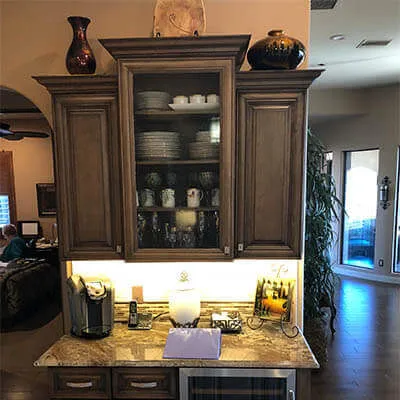


1. Mix Textures and Materials
Combining different materials—such as wood, metal, glass, and ceramics—brings contrast and interest to your décor. For example, pair a sleek metallic vase with a woven basket or a ceramic planter to strike a balance between polished and organic elements. This mix keeps the look intentional and lively.
2. Play with Heights
Use items of varying heights to create a cascading effect that naturally draws the eye upward. Start with a tall statement piece, like a vase or a sculpture, and build around it with shorter items like picture frames or smaller décor objects. This combination avoids a monotonous “one-note” look and gives the space dimension.
3. Group Items in Odd Numbers
A classic rule of thumb in interior design is the rule of threes (or any odd number). When layering décor, grouping objects in odd numbers looks more balanced and visually appealing. For instance, arrange a tall vase, a medium-sized plant, and a small stack of books together for a balanced layered display.
4. Leave Breathing Room
While layering involves multiple elements, it’s crucial to avoid overcrowding. Leave enough negative space between objects so the overall look doesn’t appear cluttered or chaotic. Thoughtful spacing helps each piece stand out while keeping the arrangement cohesive and airy.
By experimenting with height, texture, and composition, layering can add character and depth to your kitchen’s decor. Whether you aim for minimalist elegance or a more eclectic display, these tips will ensure a polished and professional look that feels authentic to your style.
The Golden Rule: Scale Over Quantity
 The Masterpiece
 The Mistake
The biggest mistake I see? Small objects. A collection of tiny knick-knacks above your cabinets just looks like clutter from across the room. If you’re going to put something up there, go big. Think large-scale pottery, a single oversized basket, or a bold piece of art. You want objects that have enough “visual weight” to hold their own against the cabinetry. If it’s smaller than a gallon of milk, it probably doesn’t belong up there.
Ideas for Decorating Above Cabinets

Now that you’re armed with best practices, let’s explore some creative ideas for decorating above your kitchen cabinets. These suggestions cater to a variety of styles and preferences, ensuring there’s something for everyone.
Add Greenery
Houseplants or faux greenery can bring life and color to your kitchen. Choose trailing plants like pothos or ivy for a cascading effect, or opt for potted herbs for a functional twist. If maintenance is a concern, high-quality faux plants are a great alternative.
Display Artwork
Turn the space above your cabinets into a mini gallery. Large-scale artwork or a series of smaller framed pieces can add visual interest and personality. Choose pieces that reflect your style, whether it’s abstract, vintage, or coastal.
Incorporate Lighting
Lighting can transform the space above your cabinets into a focal point. Consider installing LED strip lights or small spotlights to highlight your decor and create a warm, inviting ambiance.
Use Decorative Storage
Woven baskets, wooden crates, or decorative boxes can serve as both storage and decor. Use them to store seasonal items, cookbooks, or extra kitchen supplies while adding texture and warmth to your space.
Showcase a Collection
If you have a collection of items like vintage teapots, glassware, or ceramic bowls, the space above your cabinets is the perfect place to display them. Arrange items in groups of odd numbers for a balanced and visually appealing look.
Extend Your Backsplash
For a seamless and unified design, consider extending your backsplash tile up to the ceiling. This approach works particularly well in modern and minimalist kitchens, creating a clean and polished look. Here’s our guide on selecting the best backsplash for your kitchen and style.
Add Architectural Details
Crown molding, shiplap, or wainscoting can elevate the space above your cabinets, giving your kitchen a custom, high-end feel. Paint these details to match your cabinets for a cohesive look or choose a contrasting color for added drama.
Incorporate Seasonal Decor
Switching out decor seasonally is a great way to keep your kitchen feeling fresh and festive. Think pumpkins and gourds in the fall, garlands and twinkling lights during the holidays, and fresh flowers in the spring.
Incorporate Functional Décor
Décor doesn’t have to be purely ornamental—it can serve a purpose too! For example, use decorative glass jars filled with natural elements like sand, dried beans, or corks. These not only tie into a rustic or eclectic style but also make great conversation starters while filling empty or bland areas. Functional décor is key to balancing beauty and utility.
Use Natural Textures to Add Depth
Incorporating a variety of textures in your kitchen is one of the best ways to create a dynamic, inviting space. The interplay of smooth, rough, glossy, and matte finishes can elevate your design by adding depth and visual interest. Natural materials, such as wood, stone, and metal, bring warmth and authenticity to the room, making it feel both functional and stylish.
For instance, pairing sleek, polished countertops with a textured backsplash—like subway tiles or exposed brick—can create a balanced contrast between smooth and rugged elements. Similarly, combining warm wood grains with cool metals, such as stainless steel or brass hardware, adds variety while maintaining cohesion.
Layering textures doesn’t just apply to big elements like cabinets, cupboards, or countertops; smaller accents also play a role. Consider woven baskets, patterned rugs, or ceramic planters to soften the space and add intricate details. These natural textures can blend seamlessly and tie together different areas of the kitchen.
The key is to strike the right balance between complementary textures. Mixing too many busy surfaces can feel overwhelming, while too few can leave the room looking flat. Aim for a mix that feels intentional and keeps the space vibrant without overcomplicating the design.
Ideas by Kitchen Type / Style


Different kitchen styles call for unique approaches to above-cabinet decor. Here are some tailored ideas based on different designs:
1. Modern Kitchens
When decorating above cabinets in a modern kitchen, simplicity and sleekness are key. Focus on clean lines and minimalist elements that complement the contemporary aesthetic. Monochrome sculptural pieces, metallic vases, or a single strand of understated greenery can make a big impact without overwhelming the space. To maintain a sense of openness, consider incorporating lightweight or glass décor items, which can help avoid a cluttered look. Subtle LED strip lighting is an excellent addition, as it enhances the decor while making the room feel more spacious and sophisticated.
- Sleek metallic vases or sculptures
- Minimalist artwork or geometric decor
- LED strip lighting for a clean, futuristic look
Read More About: Modern Kitchen Design Trends
2. Traditional Kitchens
Traditional kitchens invite warmth and charm, and decorating above cabinets plays a big role in enhancing their elegant atmosphere. Consider showcasing decorative plates, vintage jars, or small framed artwork that matches the timeless appeal of the space. If you have at least 12-18 inches of space above your cabinets, you can arrange multiple items to create a layered display, adding depth without making the area feel cramped. Layering soft lighting, such as spotlights, can draw attention to your curated pieces and provide a cozy glow to elevate the overall ambiance. Styling with intricate, classic details helps maintain a harmonious connection to the rest of the kitchen’s design elements.
Read More About: Traditional Design Style
3. Rustic or Farmhouse Kitchens
Rustic and farmhouse kitchens thrive on their warm, homey feel, so above-cabinet decor should celebrate natural textures and vintage finds. Incorporating wicker baskets, mason jars, or rustic pottery not only ties in with the aesthetic but also takes advantage of lightweight, practical decor options. If space permits, antique kitchen tools like milk jugs or even copper pans can bring a layer of authenticity. Arranging potted greenery or burlap-wrapped plants alongside these pieces adds texture and a touch of nature, making the kitchen feel even more inviting. Keep in mind that the goal is to arrange items in a way that feels collected and lived-in while maintaining a balanced and uncluttered composition.
Read More About: Farmhouse Kitchen Design Style
Read More About: Rustic Kitchen Design Style
4. Contemporary Kitchens
Contemporary kitchens rely on bold, striking designs combined with elevated sophistication, and above-cabinet décor is no exception. Focus on oversized statement pieces like abstract sculptures, smooth geometric designs, or metallic vases. For a polished, cohesive look, select a color palette that complements the contemporary style, such as neutral tones or pops of bold color. Large items placed sparingly work best to avoid a crowded appearance, especially if the space above your cabinets is limited. Enhancing your chosen décor with discreet lighting can emphasize the modern artistry and create depth, making the kitchen feel spacious and visually stunning.
Read More About: Design of the Contemporary Kitchen
5. Eclectic Kitchens
Eclectic kitchens are the ultimate playground for creativity, offering endless opportunities to make the space uniquely yours. Above cabinets, you can display an assortment of quirky treasures, from colorful glass bottles and old cameras to vintage travel souvenirs or vibrant artwork. Even with an eclectic style, balance is key—tying pieces together through a common theme, color scheme, or material can prevent the area from feeling haphazard. If your space allows, layering textures or integrating geometric designs can enhance the overall aesthetic without being chaotic. To create an illusion of openness, incorporating glass or translucent elements is a smart choice, complemented by soft, warm lighting to maintain a welcoming vibe.
Final thoughts

Curling back to our opening consideration; Is Decorating Above Cabinets Outdated?
The short answer: it depends. While some design experts argue that decorating above cabinets can look dated, the reality is that it’s all about execution. A thoughtfully styled space can feel modern and intentional, while a cluttered or mismatched approach can quickly feel outdated.
Decorating above kitchen cabinets is an opportunity to add personality, style, and even functionality to your kitchen. By following best practices and tailoring your decor to your kitchen’s style, you can transform this often-overlooked space into a design feature that enhances your home.
Whether you’re a fan of minimalist decor, love a cozy farmhouse vibe, or want to make a bold statement, there’s no shortage of ideas to inspire your next kitchen update. The key is to focus on quality over quantity. Choose decor that enhances your kitchen’s overall design and reflects your personal style. Trends come and go, but a well-designed space is always in style. So, is decorating above cabinets still a thing? Absolutely—and it’s here to stay.


No comment